
A brand can generate strong Amazon sales and still have a fragile business. If Amazon is your only meaningful channel, a listing suppression, account issue, or policy flag can cut off revenue and customer access with little warning.
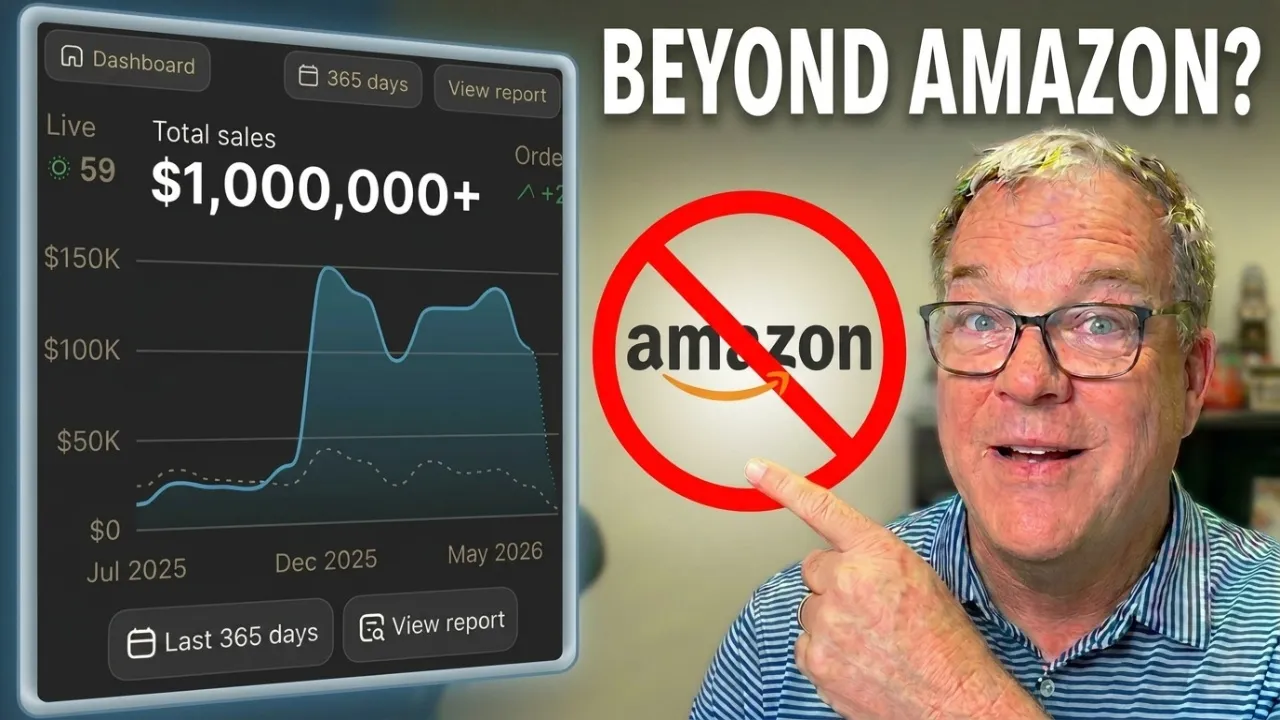
Fred McKinnon’s Shopify store recently passed $1.01 million in trailing 12-month revenue, with no sales from Amazon, Walmart, eBay, Etsy, TikTok Shop, or another marketplace included. The milestone makes a clear case for building direct-to-consumer revenue alongside marketplace sales.
Key Takeaways
- Amazon can deliver high-intent traffic and strong conversion rates, but the platform owns the customer relationship.
- A Shopify store gives you customer emails, SMS permissions, product content, and a branded destination you control.
- Direct-to-consumer revenue reduces the risk of relying on one marketplace and can support long-term business value.
- Amazon and Shopify have different strengths. A durable brand uses both with purpose.
The $1 Million Shopify Milestone Matters Beyond Revenue
The Shopify dashboard showed $1.01 million in sales over the previous 365 days. The store reached that mark after a major revenue lift in late November 2025, followed by seasonal declines that also appeared in the prior year’s data.
February showed a dip, and July showed another softer period. Those patterns matter because they show that a store can build meaningful DTC revenue while still experiencing normal demand cycles.
The large November and December sales increase followed a campaign that reportedly produced a 30x return on ad spend. That performance is important, but the broader lesson is more useful: a brand can build a seven-figure revenue channel outside a marketplace.
Amazon can help a brand grow quickly. A direct-to-consumer store gives the brand more control over what happens next.
Amazon Is Powerful, but It Is Rented Land
Amazon remains one of the strongest places to sell products online. Shoppers arrive with purchase intent, listings can convert efficiently, and the marketplace can put a newer brand in front of a large audience faster than most standalone stores can.
However, sellers do not own the platform, the shopper data, or their visibility within Amazon search results. A problem with an account or listing can interrupt sales immediately.
Common risks include:
- Seller account suspensions that can take weeks to resolve
- Listing suppression caused by policy, pricing, or category issues
- Incorrect flags, including products misidentified as pesticides
- Buy Box or pricing problems that reduce visibility
- No direct access to marketplace customer emails or phone numbers
If customers search for your brand on Amazon and cannot find the product, many will search Google next. A well-built brand site gives those shoppers another place to buy instead of sending them to a competitor.
Shopify Gives You Control Over the Customer Relationship
A Shopify store is your branded home on the internet. You control the domain, product pages, reviews, educational content, merchandising, offers, and post-purchase experience.
More importantly, you can build a customer list. The store discussed in the video has email addresses for more than 35,000 customers, and email marketing drives a substantial share of its site revenue. With platforms such as Klaviyo or Mailchimp, that list can support repeat purchases, product education, promotions, and new launches.
Here is the practical difference between the two channels:
| Area | Amazon | Shopify |
|---|---|---|
| Customer data | Amazon controls the relationship | You collect customer email and SMS permissions |
| Brand experience | Limited to Amazon’s listing structure | You control content, design, and offers |
| Traffic | Large pool of ready-to-buy shoppers | You must build and earn traffic |
| Conversion | Often stronger because buyers trust Amazon | Can be lower, especially early on |
| Risk | Platform policies can restrict visibility | You control the storefront and customer list |
The Shopify store’s trailing 365-day conversion rate was 0.35%, which is far below the 10% or higher conversion rate many Amazon sellers aim for on a strong listing. That gap does not make Shopify a weak channel. It shows why both channels should work together.
Amazon is often better at capturing ready-to-buy demand. Shopify is better for building a direct customer relationship that lasts beyond a single transaction.
A Direct Site Makes Product Launches Easier
Launching products on Amazon has become more difficult as competition, ad costs, and review expectations rise. A brand with an established customer base has an advantage because it can introduce a new product to people who already know the business.
Email and SMS campaigns can announce a launch, share product education, and send interested customers to the most appropriate purchase channel. That may be the Shopify store, Amazon, or another marketplace where the product is available.
A brand site also gives you room for content Amazon cannot fully support. You can publish product demonstrations, comparison pages, customer stories, detailed FAQs, blogs, and buying guides. That content helps customers make decisions before they reach a product page.
It also builds a more credible public presence. A branded domain makes the company feel established rather than like a temporary marketplace seller with no identity outside a listing.
Brand Maturity Includes More Than Marketplace Sales
A mature brand has multiple ways to reach buyers. It has a recognizable site, a customer database, content that explains its products, and sales channels that do not depend on one company’s rules.
This matters if you may sell the business in the future. According to McKinnon’s view, a business that depends solely on Amazon can receive a lower valuation because a buyer inherits concentrated channel risk. Revenue from a company-owned website makes the operation less dependent on a single marketplace.
A direct site can also help with AI discovery. ChatGPT, Google Gemini, Claude, and other AI tools draw on information available across the web. Product pages, reviews, demonstrations, and useful articles on your own domain give people and AI systems more evidence that your brand exists and what it sells.
McKinnon saw thousands of dollars in Shopify revenue attributed to Gemini and ChatGPT referrals. That does not guarantee the same result for every store, but it gives brand owners another reason to maintain accurate, helpful content on a domain they own.
Some shoppers also prefer buying directly from a brand. They may dislike Amazon, prefer supporting smaller businesses, or simply want to purchase from the source. Your site needs to be ready for them.
Start Building Your Direct Channel Without Leaving Amazon
A Shopify store does not need to replace Amazon. It needs to become a second foundation for your brand.
Shopify offers templates and themes that can help a brand get a basic store live quickly. Start with your best-selling products, clear shipping and return policies, brand-focused product pages, and a way to collect email subscribers. You can start a Shopify free trial and build from there.
Once the store is live, connect it to a practical customer acquisition plan. Email, paid search, organic content, creator partnerships, and retargeting can all bring qualified traffic over time. The early conversion rate may be modest, but the customer data and repeat-purchase potential can make that traffic more valuable.
Frequently Asked Questions
Q: Is Shopify better than Amazon for selling products?
A: Neither platform is better in every situation. Amazon offers marketplace traffic and often stronger conversion rates, while Shopify gives you ownership of your customer relationship, brand experience, and website content.
Q: Can a Shopify store protect revenue during an Amazon suspension?
A: It can provide another place for customers to buy while an Amazon account or listing issue is being resolved. It will not automatically replace Amazon traffic, so building the store and customer list before a problem occurs is important.
Q: Should Amazon sellers send customers to their Shopify store?
Brand owners should follow Amazon’s policies and avoid directing Amazon buyers off-platform in prohibited ways. Outside Amazon, a Shopify site can become the central destination for email marketing, content, branded search traffic, and customer retention.
Build Control Alongside Sales
A $1 million trailing 12-month Shopify milestone proves that off-Amazon revenue can become a serious part of an e-commerce business. The strongest takeaway is simple: build control, not only sales volume.
Keep using Amazon for its reach and buyer intent. At the same time, build a DTC channel that gives your brand a customer list, a permanent online home, and a backup when marketplace visibility changes.
Established brands that want help growing across Amazon, Shopify, Walmart, and other channels can schedule a free consultation with eComCatalyst. Subscribe to the eComCatalyst YouTube channel for more e-commerce growth strategies.