
The FTC says Amazon’s advertising auction system may have extracted more than $20 billion from advertisers through undisclosed pricing practices. If you’ve run Sponsored Products, Sponsored Brands, or Sponsored Display ads, the allegation could affect how you view every maximum bid in your account.
Amazon denies that it deceived advertisers or caused harm. Still, it acknowledges using hard and soft reserve prices, which puts the auction mechanics at the center of the case.
The FTC’s lawsuit against Amazon advertising
On August 31, the Federal Trade Commission and 22 states filed a 181-page lawsuit against Amazon. The FTC’s announcement of the case says Amazon allegedly changed its sponsored-ad auction pricing around 2019 without telling advertisers.
The complaint alleges that more than 1.2 million advertisers may have paid higher prices as a result. The FTC’s estimate exceeds $20 billion in additional money extracted from Amazon advertising customers.
These are allegations in an ongoing lawsuit, not proven facts or a final court verdict. The FTC says its case follows six years of investigation and draws on about 1.5 million pages of documents, Amazon data, and employee communications. Amazon denies wrongdoing and has issued a public response.

How a second-price auction was expected to work
Amazon had described sponsored-ad auctions as second-price auctions. Under that model, the winner does not automatically pay the full maximum bid. Instead, the winning advertiser pays only enough to beat the next-highest ranked advertiser.
The $2 bamboo cutting board example
Consider a seller bidding on the keyword “bamboo cutting board.”
| Auction detail | Amount |
|---|---|
| Maximum bid | $2.00 |
| Next competitor’s bid | $1.25 |
| Expected cost per click | About $1.25 or $1.26 |
The $2 bid wins the placement, but the seller expects to pay roughly $1.26 because that is enough to beat the other advertiser. The maximum bid acts as a ceiling, not the expected price for every click.
That understanding also shaped how agencies and sellers read their accounts. If a keyword had a $2 maximum bid and a $1.76 average cost per click, it was reasonable to assume a real competitor was bidding around $1.74 or $1.75.
The FTC’s soft reserve price allegation
The FTC says Amazon inserted a “soft reserve price” into a large share of its auctions. Rather than allowing the next advertiser’s bid to set the price, Amazon allegedly calculated what it believed the placement was worth and used that value as the price.
Using the same example, another advertiser could set the effective auction price at $1.26. Amazon could then determine that the placement was worth $1.80. A seller with a $2 maximum bid would still win, but would pay $1.80 rather than the amount needed to beat the competitor.
| Expected second-price auction | Auction with alleged soft reserve |
|---|---|
| Competitor’s $1.25 bid sets the price | Amazon’s internal $1.80 value sets the price |
| Winning seller pays about $1.26 | Winning seller pays $1.80 |
| Price comes from another advertiser | Price includes Amazon’s calculated reserve |
The additional $0.54 was not needed to outbid the other seller. The FTC alleges it came from an Amazon-created price inside the auction.
Advertisers believed their maximum bid would protect them from paying more than necessary to beat a real competitor.
“Proxy second price” and an “invented auction participant”
The complaint reportedly quotes Amazon employees describing the system with unusually direct language. One internal term was:
“Proxy second price”
An Amazon scientist reportedly called it:
“An invented auction participant”
Another internal document reportedly referred to a hidden “surcharge” in auction pricing. These phrases are allegations attributed to Amazon’s internal documents in the FTC complaint, not independently established findings.
The FTC also alleges Amazon understood that advertisers believed they were participating in genuine second-price auctions. Internal communications reportedly warned that disclosing the system could damage advertiser trust and prompt a downward spiral of lower bids and reduced spending.
The complaint further alleges Amazon tested how much it could increase these surcharges without advertisers noticing, including during high-volume periods such as Prime Day and Black Friday.
Full-bid payments reportedly rose sharply
One of the complaint’s central claims concerns how often Sponsored Products advertisers paid their full maximum bid.
| Year | FTC’s reported full-bid payment frequency |
|---|---|
| 2021 | About 30% to 40% |
| 2022 | About 70% |
| 2024 | About 80% |
Under the expected second-price model, advertisers would generally expect to pay less than their maximum bid. A higher rate of full-bid charges changes the meaning of setting a maximum, especially if the price reflects Amazon’s reserve instead of a competing seller’s bid.
The FTC’s claimed $20 billion figure has not been tested in court. Amazon has said it intends to make its case in court and has called the lawsuit “misguided.”
Amazon confirms reserve prices and defends them
Amazon’s public response to the FTC lawsuit says the allegations are false. It also confirms that Amazon uses both hard reserve prices and soft reserve prices.
A hard reserve is the minimum bid needed to participate in an auction. The soft reserve is Amazon’s estimate of the value of the advertising placement.
Amazon says that when a winning advertiser’s bid exceeds the soft reserve, the advertiser pays the soft reserve. If the bid clears the hard reserve but does not reach the soft reserve, Amazon may still award the placement and charge the advertiser’s full bid.
Amazon’s defense is not that advertisers could never pay their full bid. Its defense is that advertisers never paid more than the maximum bid they submitted.
Amazon says reserve prices are common across the advertising industry. It also says advertisers make decisions based on cost per click, conversion rate, sales, and return on ad spend, then adjust bids based on results.
Amazon’s performance claims don’t settle the auction question
Amazon says about 92% of Sponsored Products ads selected in 2024 did not have the highest bid. It also says average winning bids fell 50% between 2019 and 2024.
The company further says inflation-adjusted cost per click remained flat while conversion rates increased 24% from 2021 through 2025. Amazon estimates its relevance-based auction model saved advertisers more than $8 billion compared with a system that selected ads based only on the highest bid.
Those figures don’t resolve the core issue raised by the lawsuit: whether advertisers understood how Amazon calculated the price they paid. Sellers do adjust bids based on PPC performance, but auction mechanics still matter when deciding what a maximum bid should be.
A seller may accept paying a full bid when a real competitor requires it. That is different from paying the full amount because of Amazon’s calculated reserve.
What Amazon advertisers should reconsider now
The speaker’s position is that advertisers shouldn’t wait for a verdict to review how hard they are pushing paid traffic. Treat every maximum bid as a price Amazon may charge in full, because Amazon’s own explanation says it can do so in certain situations.
Across sellers, total advertising cost of sales, or TACOS, has increased. Spending 7% to 8% of total sales on ads once felt workable, then that number moved closer to 10%. Some brands now need to plan for 12% to 15%.

A closer PPC review should focus on:
- Maximum bids compared with average cost per click.
- TACOS, conversion rates, sales, and return on ad spend.
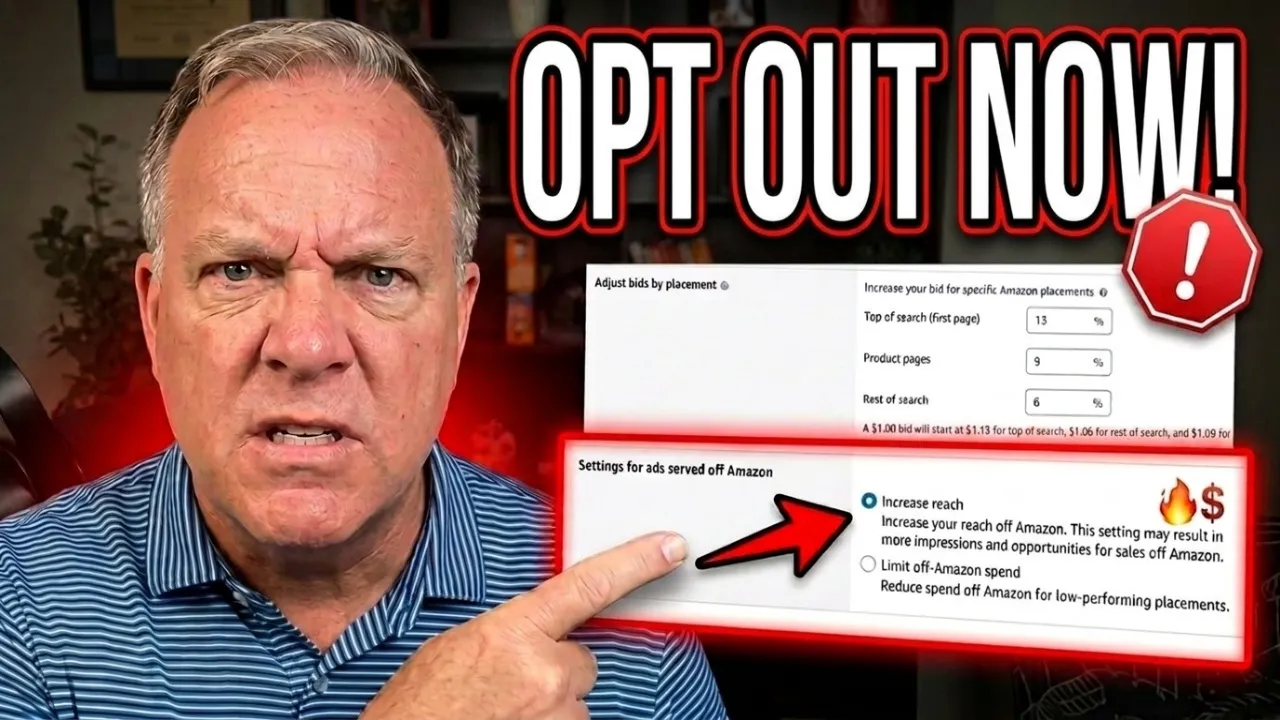
- Placement-level performance, especially clicks that don’t convert.
- Branded search spend, which the speaker says he has begun cutting and trimming for clients.
The speaker also says Amazon can place ads in areas that don’t convert well, increasing spend without providing a good return. His preference is to shift some of that spend toward external revenue sources such as TikTok Shop and affiliate marketing when Amazon ads no longer justify the cost.
Refunds and penalties are still far away
The FTC and the states seek monetary relief that could include advertiser refunds, possible civil penalties, and changes to Amazon’s advertising practices. However, the case is still in its early stages.
Amazon denies deceiving or harming advertisers. Refunds should not be expected anytime soon, and the FTC’s $20 billion estimate is not a final judgment.
The practical takeaway for Amazon PPC bids
The central lesson is straightforward: a maximum Amazon bid may be charged in full more often than advertisers assumed. That possibility changes how sellers should view bids, especially when costs and TACOS have already risen.
If paying the full bid would make a keyword or placement unprofitable, that bid deserves another look.